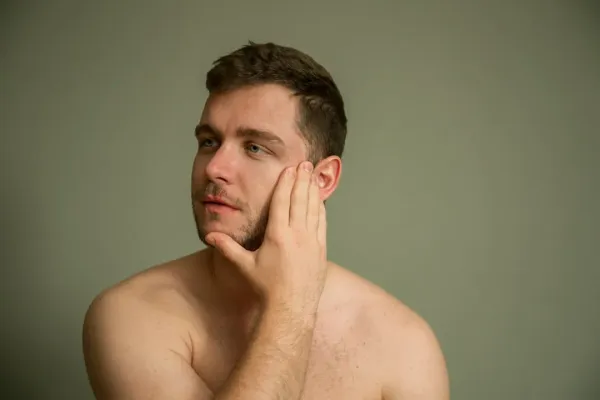
Looksmaxxing Chart: Rating Tiers, Scales & Face Classification
Looksmaxxing charts are systematic rating tools used primarily in online communities to classify facial attractiveness using standardized tiers (like LTN, MTN, HTN, Chad) and numerical scales (particularly the PSL 1-9 system). These charts assess faces across four main categories: harmony, dimorphism, facial proportions, and symmetry. They originated in internet forums focused on appearance improvement and have become increasingly visible in mainstream social media discussions, particularly among younger men seeking to understand or improve their attractiveness.
Table of Contents
- Understanding Looksmaxxing Rating Systems and Classification Charts
- What Are Looksmaxxing Charts?
- The Cultural Context Behind Rating Systems
- The PSL Scale: The Foundation of Looksmaxxing Ratings
- How the PSL Scale Works (1-9 Rating System)
- PSL vs. Traditional 1-10 Scales: Key Differences
- Tier-Based Classification Systems: HTN, LTN, MTN, and Beyond
- The 'Normie' Tiers: LTN, MTN, and HTN Explained
- Above Average Categories: Chadlite and Chad
- The Four Core Assessment Categories in Face Classification
- Facial Harmony: How Features Work Together
- Dimorphism, Proportions, and Symmetry
- How Looksmaxxing Charts Are Created and Applied
- The Rating Process: From Photos to Numbers
- AI Rating Tools and Their Accuracy
- The Science of Facial Attractiveness: What Research Actually Says
- Universal Attractiveness Principles vs. Cultural Variation
- The Limitations of Quantifying Beauty
- Psychological and Social Implications of Rating Culture
- Body Dysmorphia and Appearance Obsession
- Social Comparison and Self-Esteem Effects
- Critical Perspective: Accuracy, Bias, and Limitations
- The Subjectivity Disguised as Science
- Racial and Cultural Bias in Rating Systems
- The Missing Elements: Dynamism, Context, and Individuality
- Understanding Looksmaxxing Ratings: A Balanced Perspective
- When Rating Systems Might Have Limited Value
- The Dangers of Over-Investment in Appearance Metrics
- Moving Beyond the Numbers
Understanding Looksmaxxing Rating Systems and Classification Charts
The term "looksmaxxing" combines "looks" with "maxing" (maximizing), referring to efforts to enhance physical appearance. The charts that accompany this concept serve as diagnostic tools, offering a framework for evaluating where someone falls on an attractiveness hierarchy.
These aren't beauty pageant scorecards or casual opinions. They're structured systems with specific criteria, terminology, and measurement approaches that attempt to quantify something inherently subjective. Think of them as the Myers-Briggs of facial assessment, detailed, categorical, and more popular than scientifically validated.
What Are Looksmaxxing Charts?
Looksmaxxing charts function as visual and numerical classification systems. They typically present a hierarchy of attractiveness levels, each with defined characteristics and corresponding numerical ratings. Most charts include example photos (often of celebrities or models) to illustrate each tier.
The charts serve multiple purposes within their communities. Some users seek ratings to identify specific areas for improvement. Others use them to understand dating market dynamics or set realistic expectations for romantic prospects.
These systems claim to provide "objective" assessments by breaking attractiveness into measurable components. Facial thirds proportions, jaw angle measurements, eye spacing ratios, all become data points in a comprehensive evaluation, the charts standardize these assessments so that, theoretically, different raters would reach similar conclusions.
Well, that's the theory anyway.
The reality involves considerable disagreement even among experienced raters. Cultural preferences, personal taste, and subjective interpretation all introduce variability that these systems can't fully eliminate.
The Cultural Context Behind Rating Systems
These rating systems emerged from forums like Lookism, PUAHate, and later migrated to Reddit communities and TikTok. (According to research published in Social Media + Society, online manosphere communities have developed elaborate classification systems and terminology to categorize physical appearance, creating shared frameworks for discussing attractiveness).
The systems gained traction around 2015-2018 but exploded into mainstream awareness in 2024-2025. TikTok videos explaining PSL ratings and tier classifications now regularly accumulate millions of views. What started as niche internet culture has become recognizable to people who've never visited the original forums.
Why the sudden visibility? Social media algorithms favor content that generates strong reactions. Rating systems deliver exactly that, they're controversial, personal, and endlessly debatable. They also tap into widespread appearance anxiety amplified by filtered photos and curated online personas.
The demographic skews young and male, though women increasingly encounter these concepts through social media exposure. For mature adults observing from outside, these systems might seem bizarre or concerning. That concern isn't misplaced, as we'll explore later.
The PSL Scale: The Foundation of Looksmaxxing Ratings
The PSL scale represents the numerical backbone of most looksmaxxing assessments. PSL originally stood for "PUAHate/Sluthate/Lookism," referencing the forums where it developed, though some now interpret it as "Plastic Surgery Location."
This scale deliberately differs from conventional 1-10 ratings you might casually use. It's compressed, stricter, and treats average appearance differently than traditional systems.
How the PSL Scale Works (1-9 Rating System)
The PSL scale runs from 1 to 9, but the distribution is intentionally narrow. Most people cluster between 4 and 6. A PSL 5 represents true average, not "average but decent," just genuinely typical attractiveness.
Here's the breakdown: PSL 1-2 represents significant facial deformities or extreme unattractiveness (exceptionally rare). PSL 3 indicates below-average appearance with multiple unfavorable features. PSL 4 falls slightly below average, unremarkable but not unattractive. PSL 5 is dead-center average, the statistical middle of the population.
PSL 6 marks above-average attractiveness, noticeably good-looking in everyday contexts. PSL 7 represents model-tier attractiveness, the top 1-2% of the population. PSL 8 encompasses supermodel or elite model appearance (think prime-era male models like Sean O'Pry or Jordan Barrett). PSL 9 exists theoretically as "perfect" attractiveness but is rarely assigned to actual people.
The scale's creators argue this compression reflects reality more accurately than inflated conventional ratings. In their view, most people calling someone an "8/10" are actually looking at a PSL 6.
Ratings typically use half-point increments (4.5, 5.5, 6.5) for finer distinctions. A 0.5 difference represents a noticeable gap in attractiveness, not a trivial variation.
PSL vs. Traditional 1-10 Scales: Key Differences
Traditional 1-10 scales suffer from grade inflation, according to PSL advocates. Most people rate others between 5-9, with 7-8 being extremely common. This compression at the top end makes the scale less useful for distinguishing between attractiveness levels.
PSL attempts to correct this by making each point represent a substantial difference. A rough conversion exists: PSL 4 equals traditional 5-6, PSL 5 equals traditional 6-7, PSL 6 equals traditional 7-8, PSL 7 equals traditional 9-10.
The philosophical difference matters too. Traditional ratings often incorporate personality, charisma, or "vibe." PSL claims to assess only facial structure and features, deliberately excluding these factors. It's supposed to answer: "How attractive is this face in isolation?"
This creates some odd scenarios. Someone might be PSL 5 (average face) but highly attractive overall due to height, physique, confidence, or charm. PSL proponents argue this separation provides clarity, the scale isolates one variable in a complex equation.
Tier-Based Classification Systems: HTN, LTN, MTN, and Beyond
Alongside numerical ratings, looksmaxxing communities use tier-based classifications. These categories provide broader groupings than precise numbers, making them easier to discuss and remember.
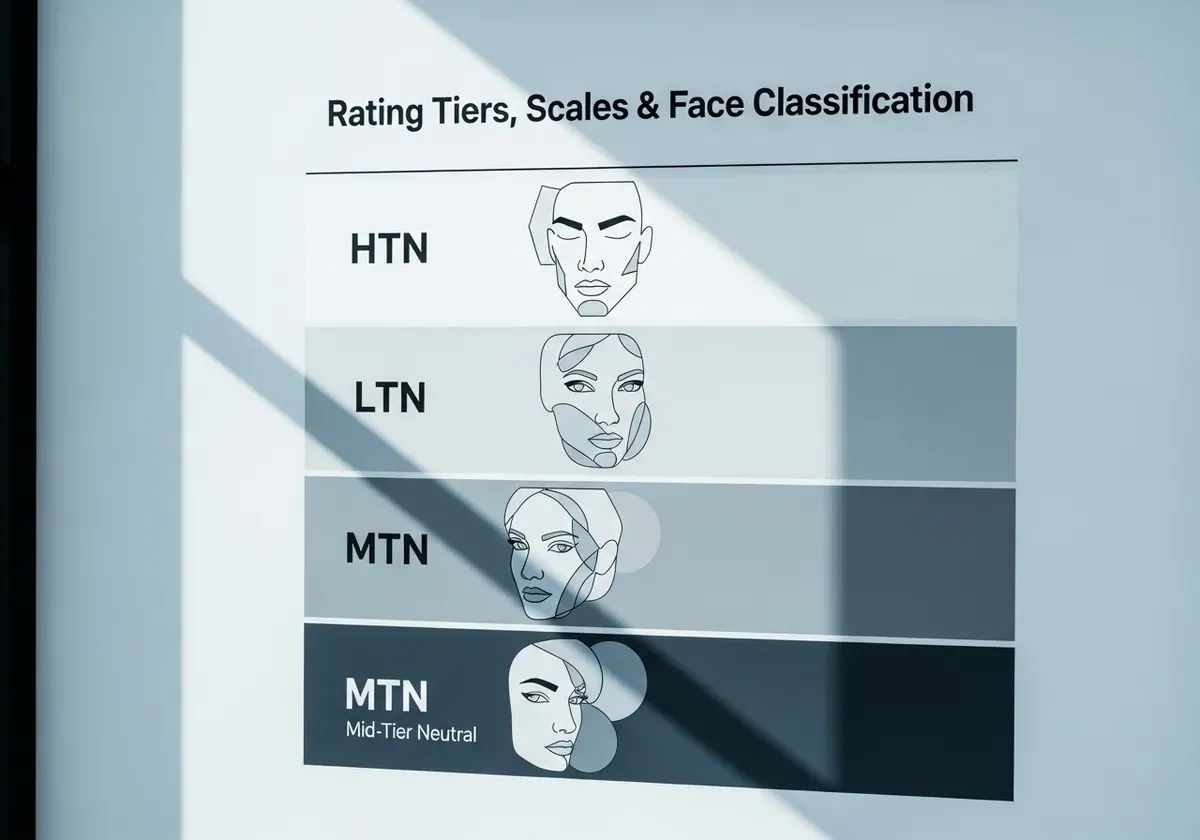
Looksmaxxing Tier Classification System
| Tier Abbreviation | Full Name | Description | Attractiveness Level | Typical PSL Range |
|---|---|---|---|---|
| LTN | Low Tier Normie | Below average attractiveness, limited dating market success | Below Average | 1-3 |
| MTN | Mid Tier Normie | Average attractiveness, moderate dating prospects | Average | 4-5 |
| HTN | High Tier Normie | Above average but not exceptional, good dating prospects | Above Average | 6-7 |
| Chadlite | Near-Chad | Very attractive, exceptional features, high market value | Very High | 7.5-8 |
| Chad | Peak Attractiveness | Elite tier, exceptional facial harmony and dimorphism, maximum dating market value | Exceptional | 8.5-9 |
While tier classifications provide categorical frameworks, the PSL scale offers a numerical precision that distinguishes it from conventional attractiveness rating systems.
PSL Scale vs. Traditional 1-10 Rating Systems
| Rating Scale | Range | Average Rating | Interpretation Philosophy | Distribution Approach |
|---|---|---|---|---|
| PSL Scale | 1-9 | 4-5 | Stricter, compressed scale treating average as below-average | Intentionally skewed toward lower ratings |
| Traditional 1-10 Scale | 1-10 | 5-6 | Conventional approach with 5-6 as true middle ground | More distributed across full range |
| Key Difference | Narrower range | Lower baseline | PSL considers 5 as below average; traditional treats 5 as average | PSL concentrates ratings at lower end |
The terminology sounds like gaming jargon because it essentially is. These communities borrowed the concept of character tiers from video games and applied it to human attractiveness.
The 'Normie' Tiers: LTN, MTN, and HTN Explained
The term "normie" refers to normal, average appearance, the vast middle of the attractiveness distribution where most people land. This range is subdivided into three tiers.
LTN (Lower Tier Normie) corresponds roughly to PSL 4-4.5. These individuals have below-average but not unattractive faces. They might have one or two less favorable features but nothing particularly striking in either direction. In practical terms, LTNs blend into crowds without standing out positively or negatively.
MTN (Mid Tier Normie) aligns with PSL 5-5.5, representing true average attractiveness. This is the statistical center, neither advantaged nor disadvantaged by appearance. MTNs have balanced features without significant flaws or standout attractive qualities.
HTN (Higher Tier Normie) covers PSL 5.5-6, the above-average range. HTNs are noticeably good-looking in everyday contexts. They receive compliments, do well in dating apps, and benefit from attractiveness in social situations. However, they're not striking enough to be mistaken for models or to have appearance dominate how others perceive them.
These three categories encompass roughly 80% of the population. The terminology might sound clinical, but it reflects the system's attempt to segment the broad middle ground where traditional ratings often blur together.
Above Average Categories: Chadlite and Chad
Above the normie tiers sit the aspirational categories that dominate looksmaxxing discussions. "Chad" originated as internet slang for an archetypal attractive, successful man, the term has been adopted into these rating systems as a formal classification.
Chadlite represents PSL 6-6.5, the model-adjacent tier. These individuals are conventionally very attractive, turning heads in public and having significant advantages in dating. They're not quite professional model material but close enough to be occasionally mistaken for it.
Chad encompasses PSL 7-7.5, the elite attractiveness tier. True Chads have model-quality faces with exceptional harmony, striking features, and minimal flaws. They represent roughly the top 1% of attractiveness. In practical terms, Chads experience substantially different social dynamics than average individuals, their appearance opens doors and creates opportunities automatically.
Above Chad sits "Gigachad" (PSL 8+), a mostly theoretical category representing near-perfect attractiveness. The term is often used semi-ironically, acknowledging that this level exists more as an ideal than a common reality.
Below the normie tiers, terms like "subhuman" appear in some communities, language that reveals the toxic aspects of these systems. We'll address that later.
The Four Core Assessment Categories in Face Classification
Looksmaxxing charts don't just assign numbers arbitrarily. They evaluate faces across four primary dimensions that supposedly determine overall attractiveness. Understanding these categories explains how ratings are derived.
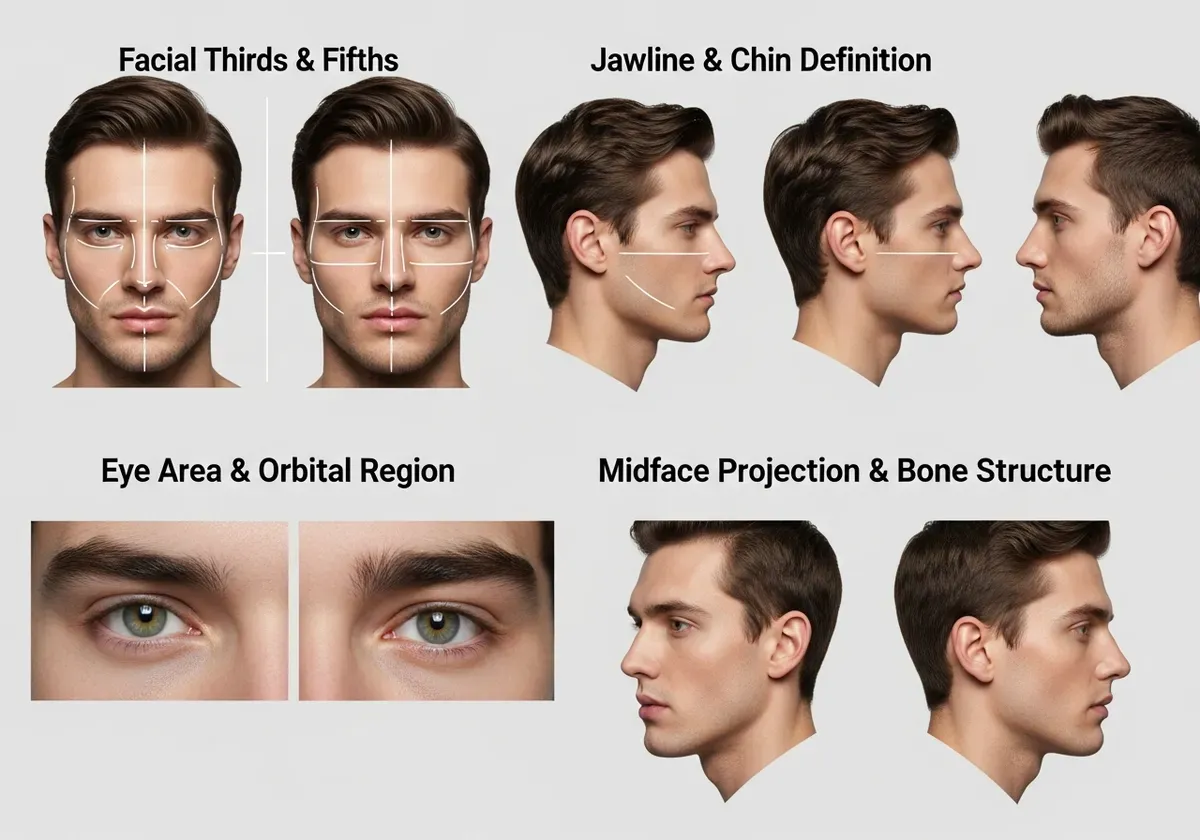
Facial Harmony: How Features Work Together
Harmony refers to how well facial features complement each other as a unified whole. A face can have individually attractive features that don't work together, or unremarkable features that create an appealing overall impression.
This category is the most subjective of the four. Harmony involves gestalt perception, the face as more than the sum of its parts. Raters assess whether features are proportionally balanced, whether the overall impression is cohesive, and whether anything looks "off" despite individual features being acceptable.
Examples help clarify the concept. Large eyes might harmonize beautifully with delicate features but overwhelm a face with a strong, angular jaw. A prominent nose might look distinguished on a masculine face but unbalanced on a smaller, more feminine one.
Harmony explains why some people are universally considered attractive despite having features that deviate from ideal measurements. The features work together effectively, creating an appealing overall impression that transcends individual analysis.
I once consulted with a client who was fixated on getting a rhinoplasty because he thought his nose was too large. When I analyzed his face as a whole, I realized his strong nose actually balanced perfectly with his pronounced cheekbones and square jawline—reducing it would have made his face look oddly top-heavy. After showing him side-by-side digital mockups, he could finally see what I meant: sometimes what we perceive as a flaw is actually the keystone holding the entire facial structure together.
Dimorphism, Proportions, and Symmetry
Sexual dimorphism refers to masculine versus feminine facial characteristics. For men, this includes features like a strong jawline, prominent brow ridge, wide chin, and angular bone structure. For women, it encompasses smaller jaws, fuller lips, larger eyes relative to face size, and softer, rounder contours.
Dimorphism isn't about conforming to stereotypes, it's about biological markers that distinguish male and female faces. (According to research published in the National Institutes of Health database, sexual dimorphism in facial features plays a significant role in attractiveness judgments, with preferences varying based on context and individual differences).
Facial proportions involve measurements like the rule of thirds: the face divided into three equal vertical sections (forehead to eyebrows, eyebrows to nose bottom, nose bottom to chin). Deviations from these proportions can affect perceived attractiveness, though perfect adherence isn't required for an attractive face.
Symmetry measures how closely the left and right sides of the face mirror each other. (Research consistently finds that facial symmetry is associated with perceived attractiveness across cultures). Perfect symmetry is rare and not actually necessary for attractiveness, but significant asymmetries typically reduce ratings.
These three factors are more measurable than harmony, which makes them popular in rating systems attempting objectivity. Software can calculate symmetry percentages and proportion ratios, providing numerical data that feels scientific.
How Looksmaxxing Charts Are Created and Applied
Understanding the theory behind these systems is one thing. How they're actually used in practice reveals both the methodology and its limitations.
The Rating Process: From Photos to Numbers
When someone requests a rating in looksmaxxing communities, they typically submit multiple photos following specific guidelines. Front-facing photos with neutral expressions are standard. Side profiles are requested to assess jaw projection and facial angles. Photos should have neutral lighting without filters or favorable angles.
Multiple community members then provide ratings, often with detailed breakdowns by category. A rating might look like: "PSL 5.5, harmony 6/10, dimorphism 7/10, proportions 5/10, symmetry 6/10." Raters explain their reasoning, pointing to specific features that raise or lower the overall score.
The consensus approach theoretically reduces individual bias. If ten raters independently assess someone as PSL 5-5.5, that's considered more reliable than a single opinion. In practice, ratings still vary by a full point or more, revealing the subjectivity these systems try to eliminate.
Some communities have "trusted raters", experienced members whose assessments carry more weight. This creates an informal hierarchy of rating authority, though it also introduces potential for groupthink and entrenched biases.
AI Rating Tools and Their Accuracy
The proliferation of AI-powered attractiveness rating apps has brought looksmaxxing concepts to a broader audience. Apps like FaceRate, Prettyscale, and others claim to objectively assess facial attractiveness using algorithms trained on large datasets.
These tools typically measure facial proportions, symmetry, and feature relationships, then generate a numerical score. Some provide breakdowns by category, similar to human raters in forums. The appeal is obvious: instant, "objective" feedback without the social awkwardness of requesting human ratings.
The accuracy is questionable. AI ratings often conflict with human assessments and with each other, the same face might receive a 6.5 from one app and an 8.2 from another. The algorithms reflect the biases present in their training data, which may not represent diverse populations or beauty standards.
To be fair, AI tools can measure symmetry and proportions accurately. Where they struggle is harmony and context-dependent factors that humans instinctively process. An AI might rate a face highly based on measurements while humans find something ineffably "off" about the overall impression.
The Science of Facial Attractiveness: What Research Actually Says
Looksmaxxing systems claim scientific foundations, but what does academic research actually reveal about facial attractiveness? The answer is more nuanced than rating charts suggest.
Universal Attractiveness Principles vs. Cultural Variation
(According to evolutionary research published in the NIH database, while some aspects of facial attractiveness appear universal across cultures, such as symmetry and averageness, other preferences show significant cultural variation). This creates a complicated picture: attractiveness isn't entirely subjective, but it's not fully objective either.
Symmetry shows cross-cultural agreement as an attractiveness factor. Studies across diverse populations consistently find that more symmetrical faces receive higher attractiveness ratings. The evolutionary explanation suggests symmetry signals genetic health and developmental stability.
Averageness, faces close to the population average in feature size and spacing, also demonstrates cross-cultural appeal. (Research shows that average faces are generally perceived as more attractive than distinctive faces, a phenomenon replicated across multiple studies). This seems counterintuitive until you consider that average faces lack extreme or unusual features that might signal genetic abnormalities.
However, cultural variation is substantial in other areas. Preferences for masculine versus feminine features vary across cultures and contexts. Skin tone preferences are heavily culturally influenced. Body weight ideals differ dramatically between societies and historical periods.
Individual variation matters too. (Despite some universal tendencies, individual differences in attractiveness judgments are considerable, suggesting that beauty perception is not entirely objective). Your personal "type" isn't just cultural programming, genuine individual variation in preferences exists.
The Limitations of Quantifying Beauty
Academic researchers study facial attractiveness, but they approach it differently than looksmaxxing communities. Scientific studies typically use averaged ratings from large, diverse groups. They examine statistical trends across populations, not absolute rankings of individuals.
Researchers acknowledge that attractiveness serves multiple functions beyond mate selection. It influences hiring decisions, salary negotiations, jury verdicts, and countless social interactions. Understanding these effects has practical importance for addressing bias.
But scientists also recognize that attractiveness is multidimensional and context-dependent. A face rated highly attractive in one context might be rated differently in another. Dynamic factors like expressions, voice, and movement significantly impact perceived attractiveness but are absent from static photo ratings.
The gap between research and rating systems is significant. Science identifies general trends and averages. Rating systems attempt to assign precise numbers to individuals, claiming objectivity that research doesn't support. A PSL rating pretends to be scientific while actually being a formalized version of subjective opinion.
"Beauty is not simply in the eye of the beholder, it's in the brain of the beholder—and that brain has been shaped by both evolution and culture," says Dr. Nancy Etcoff, psychologist at Harvard Medical School and author of Survival of the Prettiest: The Science of Beauty.
Psychological and Social Implications of Rating Culture
These rating systems don't exist in a vacuum. They affect how people think about themselves and others, with consequences that extend beyond online forums.
Body Dysmorphia and Appearance Obsession
(According to research on body dysmorphic disorder and social media, increased social media usage is associated with heightened symptoms of body dysmorphic disorder, particularly in vulnerable populations). Looksmaxxing communities intensify this dynamic by providing constant appearance evaluation and comparison.
The systems can trigger or worsen body dysmorphic disorder, a condition where people become obsessively preoccupied with perceived flaws in their appearance. When you're encouraged to analyze your facial thirds, measure your jaw angle, and compare yourself to idealized examples, minor insecurities can spiral into major psychological distress.
Young men appear particularly vulnerable. Traditional masculine norms discouraged appearance obsession, but online communities have created spaces where men extensively discuss and worry about their looks. This isn't inherently negative, men should be able to care about appearance, but the intensity and negativity in some communities crosses into unhealthy territory.
The numerical precision of these systems creates an illusion of objectivity that makes ratings feel like unchangeable verdicts. Being told you're "PSL 4.5" can feel like receiving a medical diagnosis rather than one subjective opinion. This perceived objectivity amplifies the psychological impact.
Social Comparison and Self-Esteem Effects
(Research from the American Psychological Association shows that social media use, particularly when it involves appearance-based comparisons, is associated with lower self-esteem and body dissatisfaction). Rating systems formalize and intensify these comparisons.
The hierarchical structure, with clear tiers and aspirational categories, encourages upward social comparison. You're constantly comparing yourself to higher tiers rather than appreciating your own appearance. This is psychologically corrosive, especially for younger users still developing self-concept.
The communities also create echo chambers where appearance becomes disproportionately important. In the real world, attractiveness matters but competes with personality, intelligence, humor, kindness, and competence. In rating-focused communities, appearance dominates discussions and becomes the primary measure of worth.
Honestly, the terminology itself reveals problematic attitudes. Terms like "subhuman" for unattractive individuals, or the obsessive focus on minor facial features, suggest a worldview where appearance determines human value. That's not just psychologically unhealthy, it's morally troubling.
Critical Perspective: Accuracy, Bias, and Limitations
Let's address the elephant in the room: these systems claim objectivity they don't possess. Understanding their limitations is crucial for anyone encountering them.
The Subjectivity Disguised as Science
Looksmaxxing charts present themselves as objective measurement tools, but they're fundamentally subjective opinions dressed in scientific language. Measurements and categories create an appearance of rigor without actually eliminating personal preference.
Different raters regularly disagree by a full point or more on the PSL scale. That's not minor variation, it's the difference between "below average" and "above average." If the system were truly objective, trained raters should converge on nearly identical scores. They don't.
The four assessment categories involve significant subjective judgment. What constitutes good "harmony"? How much does a specific proportion deviation matter? These questions don't have objective answers, despite the systems' pretense otherwise.
Cultural and personal biases inevitably influence ratings. Raters trained in communities with specific beauty standards will reproduce those standards, not discover universal truths. The "objectivity" is really just consensus within a particular subculture.
Racial and Cultural Bias in Rating Systems
A serious limitation rarely addressed within looksmaxxing communities is racial and cultural bias. The systems were developed primarily by and for young white men, and the beauty standards reflect this demographic origin.
Features common in non-white populations are often rated less favorably. Broader noses, fuller lips, darker skin, and non-European facial structures frequently receive lower ratings, not because they're objectively less attractive but because the rating standards are culturally specific.
The celebrity examples used to illustrate high tiers are overwhelmingly white. This isn't accidental, it reflects the beauty standards embedded in these systems. A truly objective system would find elite attractiveness distributed proportionally across racial groups. These systems don't.
The Missing Elements: Dynamism, Context, and Individuality
Static photo ratings miss crucial elements of real-world attractiveness. Facial expressions, animation, voice, body language, and movement all significantly impact how attractive someone appears in person. A still photo captures none of this.
Context matters enormously. Attractiveness perception changes based on setting, social dynamics, and the comparison pool. Someone might be highly attractive in their everyday environment but average in a room full of models. These systems ignore contextual factors entirely.
Individual variation in preferences is substantial. Your perfect "type" might be someone else's "not my thing." These systems attempt to identify universal attractiveness while ignoring genuine individual differences in what people find appealing.
Research published in the Journal of Personality and Social Psychology (2015) found that individual preferences in facial attractiveness vary significantly, with only about 50% of attractiveness judgments explained by shared standards across raters. A study by Hönekopp (2006) demonstrated that while some facial features show cross-cultural agreement, individual differences in mate preferences account for substantial variance in attractiveness ratings. Furthermore, research from Harvard University (2017) revealed that contextual factors—including the attractiveness of surrounding faces in a comparison set—can shift an individual's rating by 1-2 points on a 10-point scale, demonstrating that attractiveness perception is highly malleable rather than fixed.
Understanding Looksmaxxing Ratings: A Balanced Perspective
So what should you take away from all this? If you're encountering these rating systems, whether through your own curiosity or because someone in your life is involved, here's a balanced perspective.
When Rating Systems Might Have Limited Value
These systems can provide a reality check for people with distorted self-perception. Someone convinced they're hideously unattractive might receive feedback that they're actually average or above. This can be genuinely helpful for people with severe appearance anxiety based on inaccurate self-assessment.
The detailed breakdown of facial features can identify specific areas someone might address through grooming, skincare, hairstyle changes, or (in some cases) cosmetic procedures. If you're considering aesthetic improvements, understanding how others perceive your features provides useful information.
For some people, the analytical approach reduces anxiety. Instead of vague worry about "not being attractive enough," they have specific information to consider and potentially act on. Structure and information can be comforting.
Worth noting: these benefits assume engagement with the systems remains moderate and doesn't become obsessive.
The Dangers of Over-Investment in Appearance Metrics
The risks substantially outweigh the benefits for most people. Becoming preoccupied with numerical ratings and tier classifications can damage self-esteem, fuel body dysmorphia, and distort your understanding of what matters in life and relationships.
These systems reduce human worth to facial measurements. That's not just inaccurate, it's dehumanizing. Your value as a person, your relationship potential, and your life satisfaction depend on far more than where you fall on someone's rating chart.
The communities themselves often promote toxic attitudes. Extreme negativity, misogyny, racism, and defeatist thinking are common in many looksmaxxing spaces. Even if the rating systems themselves were perfectly accurate (they're not), the surrounding culture is frequently harmful.
For young people especially, these systems can derail normal development. Adolescence already involves appearance concerns and social comparison. Adding formalized rating systems and appearance obsession can intensify these struggles rather than resolving them.
Moving Beyond the Numbers
If you're interested in improving your appearance, there are healthier approaches than seeking PSL ratings. Basic self-care, good grooming, appropriate hairstyle, skincare, fitness, and clothing that fits well, improves appearance without requiring obsessive analysis.
Professional input from stylists, dermatologists, or image consultants provides expert guidance without the toxic community dynamics. These professionals understand appearance enhancement without reducing you to a number or comparing you to impossible ideals.
Most importantly, remember that attractiveness is one factor among many in a fulfilling life. Kindness, competence, humor, intelligence, reliability, and shared interests matter enormously in relationships and social success. Obsessing over facial thirds while neglecting these qualities is backwards.
The people who love you, and the people worth pursuing relationships with, care about who you are, not whether you're PSL 5.5 versus 6. That might sound like empty reassurance, but it's simply true. Look around at the couples you know. Most aren't matched by rating-system standards, because real attraction involves far more than facial measurements.
These rating systems reveal more about online culture's obsession with quantification and ranking than about human attractiveness. Approach them with skepticism, limit your engagement, and remember that you're more than a number on someone's chart.
Related Articles
- Looksmaxxing Tiers Explained: From LTN to Chad
- Looksmaxxing Face Rater: How to Rate Your Own Facial Features
- Looksmaxxing Chart for Women: Female Rating Scale Guide
- Looksmaxxing Chart for Men: Male Rating Scale Explained
- PSL Rating System: Understanding PSL Score & Attractiveness Scale
- Looksmaxxing Definition: What Does Looksmaxing Mean?
Frequently Asked Questions
What does PSL stand for and how does the 1-9 scale work?
PSL stands for a numerical rating system (1-9) used in looksmaxxing communities to classify facial attractiveness, with higher numbers indicating greater attractiveness. The scale breaks down facial features into measurable components like harmony, symmetry, and proportions, though raters often disagree on exact ratings due to subjective interpretation and cultural preferences.
What do the tier abbreviations LTN, MTN, and HTN mean?
LTN, MTN, and HTN are tier-based classifications for attractiveness levels: LTN (Low Tier Normie), MTN (Mid Tier Normie), and HTN (High Tier Normie). These represent average to above-average attractiveness ranges, with additional tiers like Chadlite and Chad describing even higher levels of perceived attractiveness.
Are looksmaxxing rating charts scientifically accurate?
While these charts claim to provide objective assessments by measuring facial proportions and symmetry, they're not scientifically validated tools. Research shows that attractiveness involves subjective factors that can't be fully quantified, and considerable disagreement exists even among experienced raters due to cultural preferences and personal bias.
Can AI tools accurately rate facial attractiveness using looksmaxxing standards?
AI rating tools exist within looksmaxxing communities, but their accuracy is limited by the same subjectivity issues that affect human raters. These tools may measure physical proportions, but they cannot account for cultural variation, individual preference, context, or dynamic qualities like expression and charisma that influence real-world attractiveness.
What are the psychological risks of using looksmaxxing rating systems?
Frequent use of these rating systems can contribute to body dysmorphia, appearance obsession, and reduced self-esteem through social comparison. The systems encourage viewing attractiveness as a quantifiable hierarchy, which may distort self-image and create unhealthy fixation on appearance metrics rather than overall well-being.
Do looksmaxxing charts have racial or cultural bias?
Yes, research indicates these rating systems often embed racial and cultural biases by applying Eurocentric beauty standards as universal measures. The systems may undervalue features common in non-Western populations and fail to account for how attractiveness preferences vary significantly across different cultures and communities.
What important factors do looksmaxxing charts fail to measure?
Looksmaxxing charts overlook dynamism (how someone looks when moving, smiling, or expressing emotion), social context, personality, confidence, and individual charisma. These elements significantly influence real-world attractiveness but cannot be captured in static photo analysis or numerical ratings.