Looksmaxxing Jawline Exercises: Best Techniques That Work

Jawline exercises can strengthen facial muscles and improve definition, but they won't reshape your bone structure or replace weight loss. You'll see modest improvements in muscle tone after 8-12 weeks of consistent practice, primarily by developing the masseter and platysma muscles. The biggest factor in jawline visibility isn't exercise at all, it's body fat percentage and posture.
Table of Contents
- Understanding Looksmaxxing Jawline Exercises: What They Can and Cannot Do
- The Science Behind Facial Muscle Training
- Realistic Expectations Based on Your Starting Point
- 5 Evidence-Based Jawline Exercises That Actually Work
- Chin Lift Exercise (Platysma Muscle Activation)
- Neck Curl-Up (Lower Face Strengthening)
- Controlled Jaw Resistance Exercise
- Tongue Position and Press Techniques
- Creating Your Weekly Exercise Routine
- Safety Considerations and When to Avoid Jawline Exercises
- Medical Conditions That Require Caution
- Signs You're Overdoing It
- Proper Warm-Up and Cool-Down Protocol
- Beyond Exercise: Lifestyle Factors That Impact Jawline Definition
- Body Fat Percentage: The Biggest Factor in Jawline Visibility
- Posture Correction for Immediate Jawline Improvement
- Reducing Facial Bloating and Water Retention
- Measuring Progress and Setting Realistic Timelines
- Alternative and Complementary Approaches to Jawline Enhancement
Understanding Looksmaxxing Jawline Exercises: What They Can and Cannot Do
The "looksmaxxing" trend has popularized jawline exercises, but the science tells a more nuanced story. These exercises work like any other muscle training, they can strengthen and slightly enlarge the muscles involved. Just don't expect miracles.
Your jawline appearance depends on three factors: bone structure (genetics), muscle development, and subcutaneous fat. Exercises only address the middle one. If you're carrying extra weight around your face, no amount of chin lifts will reveal definition, that's just biology.
The Science Behind Facial Muscle Training
The masseter muscle powers your chewing motion and responds to resistance training like any skeletal muscle (According to StatPearls anatomy reference). When you work it consistently, it can develop hypertrophy, increased size and strength.
The platysma muscle runs from your chest to your jawline. Targeting it through specific exercises can create a tighter appearance along the neck and lower face. Think of it as the neck equivalent of doing planks for your core.
Research on facial exercises remains limited but shows promise. One study published in JAMA Dermatology found that middle-aged women who performed facial exercises for 20 weeks showed measurable improvements in cheek fullness and facial appearance. Worth noting: the study was small, and results varied considerably between participants.
A systematic review in Complementary Therapies in Medicine concluded that facial exercises showed "some beneficial effects" but acknowledged the evidence quality was low to moderate. Most studies had small sample sizes and lacked proper control groups.
The mechanism is straightforward. Resistance creates micro-tears in muscle fibers, which rebuild stronger. The same principle that builds your biceps applies to your masseter, just on a much smaller scale.
Realistic Expectations Based on Your Starting Point
Your genetics set the framework. Some people naturally have prominent jaw angles and defined mandibles. Others have rounder faces regardless of body composition. Exercises won't change your skeletal structure (According to research on facial skeletal aging published in peer-reviewed studies).
Age matters significantly. Facial aging involves multiple layers, skin loses elasticity, fat pads shift downward, and bone resorption occurs in the mandible (According to JAMA Facial Plastic Surgery). Exercises can't reverse these structural changes, though they may slow visible decline.
If you're over 55, your skin has less collagen than it did at 30. That means muscle development underneath may not translate to surface definition as dramatically. The exercises still benefit muscle tone and function, but the visual payoff is more subtle.
Body composition trumps everything. A man at 25% body fat won't have visible jawline definition no matter how strong his masseter muscles are. Drop to 15% body fat, and suddenly the bone structure and muscle tone become apparent.
Timeline expectations: most people notice subtle changes around week 6-8 with daily practice. Significant improvement takes 12-16 weeks. I worked with a client in his late fifties who committed to jaw exercises for four months straight—his masseter strength genuinely improved, and he could feel the difference when chewing. But when we took progress photos, the visual change was disappointing compared to a 28-year-old client doing the same routine, simply because his skin didn't snap back the same way. We pivoted his focus to overall facial posture and neck strengthening, which gave him better functional results he could actually see in the mirror.
5 Evidence-Based Jawline Exercises That Actually Work
These exercises target the masseter, platysma, and digastric muscles. Perform them 5-6 days weekly, allowing at least one rest day for recovery. Quality beats quantity, proper form matters more than repetitions.

Jawline Exercise Timeline and Realistic Expectations by Age Group
| Age Group | Expected Timeline to Notice Changes | Visual Results Potential | Primary Limiting Factors |
|---|---|---|---|
| 18-30 years old | 6-8 weeks with daily practice | High - muscle definition becomes visible | Body fat percentage, consistency |
| 31-54 years old | 8-12 weeks with daily practice | Moderate - noticeable but gradual | Skin elasticity, body fat percentage |
| 55+ years old | 12-16 weeks with daily practice | Low to Moderate - subtle improvements | Collagen loss, bone resorption, skin elasticity |
Chin Lift Exercise (Platysma Muscle Activation)
Stand or sit with your spine straight. Tilt your head back until you're looking at the ceiling. Keep your lips closed but relaxed. Push your lower jaw forward until you feel a stretch under your chin and along your neck.
Hold for 10 seconds. Return to neutral. That's one rep. Start with 10 repetitions, twice daily. You should feel tension but never pain. If you have neck arthritis, reduce the range of motion by half.
Common mistake: tensing your shoulders. Keep them down and relaxed throughout. The work happens in your neck and lower face, nowhere else.
Neck Curl-Up (Lower Face Strengthening)
Lie on your back with your tongue pressed against the roof of your mouth. This activates stabilizing muscles. Lift your head slightly off the floor, just 2-3 inches, while keeping your shoulders down.
Hold for 5 seconds. Lower slowly. Start with 8-10 reps. Progress to 15 reps over several weeks. If floor exercises are difficult, prop yourself on pillows or try the exercise seated with resistance from your hand against your forehead.
You're working the anterior neck muscles and platysma. The tongue position is critical, it prevents strain on the wrong muscles.
Controlled Jaw Resistance Exercise
Place your fist under your chin. Open your mouth against the resistance of your fist, gentle pressure only. Hold for 3 seconds. Close. That's one rep. Do 10 reps, twice daily.
The controversial "towel method" involves biting down on a rolled towel. Honestly, I'd skip it. The risk of TMJ aggravation outweighs any benefit (According to the National Institute of Dental and Craniofacial Research, conservative treatments are recommended for jaw health).
If you have any jaw clicking, popping, or pain, avoid resistance exercises entirely. They can worsen existing TMJ dysfunction.
Tongue Position and Press Techniques
Press your entire tongue against the roof of your mouth, not just the tip. This is the basic principle behind "mewing," though that term comes with internet baggage. The practice itself has merit for muscle engagement.
Hold for 30 seconds. Release. Repeat 5 times. This strengthens the tongue muscles and may improve jaw positioning over time, particularly if you habitually rest your tongue on the floor of your mouth.
The effect is subtle. Don't expect dramatic changes, but proper tongue posture can reduce forward head position and improve the neck-to-jaw angle.
Creating Your Weekly Exercise Routine
Monday through Saturday: perform all four exercises once in the morning. Takes about 8 minutes total. Sunday: rest day. Your muscles need recovery time.
Track progress with photos taken in identical lighting, same angle, every two weeks. Measurements don't work well for facial features, visual comparison is more reliable. Look for subtle changes in the neck-to-jaw angle and under-chin definition.
Combine exercises with proper hydration and posture work for best results. The exercises alone have limited impact.
Safety Considerations and When to Avoid Jawline Exercises
Jaw exercises carry real risks if you have certain conditions or push too hard. Your temporomandibular joint is complex and surprisingly fragile.
Medical Conditions That Require Caution
TMJ disorders are the primary contraindication. If you experience jaw pain, clicking, or limited range of motion, skip these exercises entirely (According to the National Institute of Dental and Craniofacial Research). Resistance work can exacerbate inflammation and damage.
Recent dental work, implants, crowns, bridges, needs time to settle. Wait at least 8 weeks after major dental procedures before starting jaw exercises. Check with your dentist first.
Arthritis in the jaw joint makes resistance exercises risky. The cartilage is already compromised. Adding stress can accelerate degeneration. Gentle stretches might be acceptable, but resistance work is off the table.
Chronic tension headaches or migraines with jaw involvement suggest you're already overworking these muscles. More exercise will make things worse, not better. Address the underlying tension first through massage or physical therapy.
Signs You're Overdoing It
Sharp pain during or after exercises means stop immediately. Dull aching that persists more than an hour after exercise indicates you're working too hard or too frequently.
New clicking or popping sounds in your jaw joint are warning signs. Your TMJ is unhappy. Take a week off and resume at lower intensity if symptoms resolve.
Tooth sensitivity that develops after starting jaw exercises suggests you're clenching too hard. You might be doing this unconsciously during the day too, stress-related bruxism often worsens when you add deliberate jaw work.
Headaches that start at the temples or behind the eyes often stem from masseter overuse. The muscle refers pain to surrounding areas. Reduce frequency to every other day.
If symptoms persist beyond a week of rest, consult your doctor or dentist. TMJ damage is cumulative and harder to fix than prevent.
Proper Warm-Up and Cool-Down Protocol
Before exercises, massage your jaw muscles for 60 seconds. Use your fingertips in small circles along the jaw angle where you can feel the masseter bulk.
Gentle side-to-side jaw movements, 5 reps each direction, increase blood flow without resistance. Open and close your mouth slowly 5 times to lubricate the joint.
After exercises, repeat the massage. Apply a warm compress for 2-3 minutes if you feel any tightness. This prevents delayed soreness.
Beyond Exercise: Lifestyle Factors That Impact Jawline Definition
Here's the thing: exercises are maybe 20% of the equation. The rest comes down to factors that have nothing to do with muscle training.
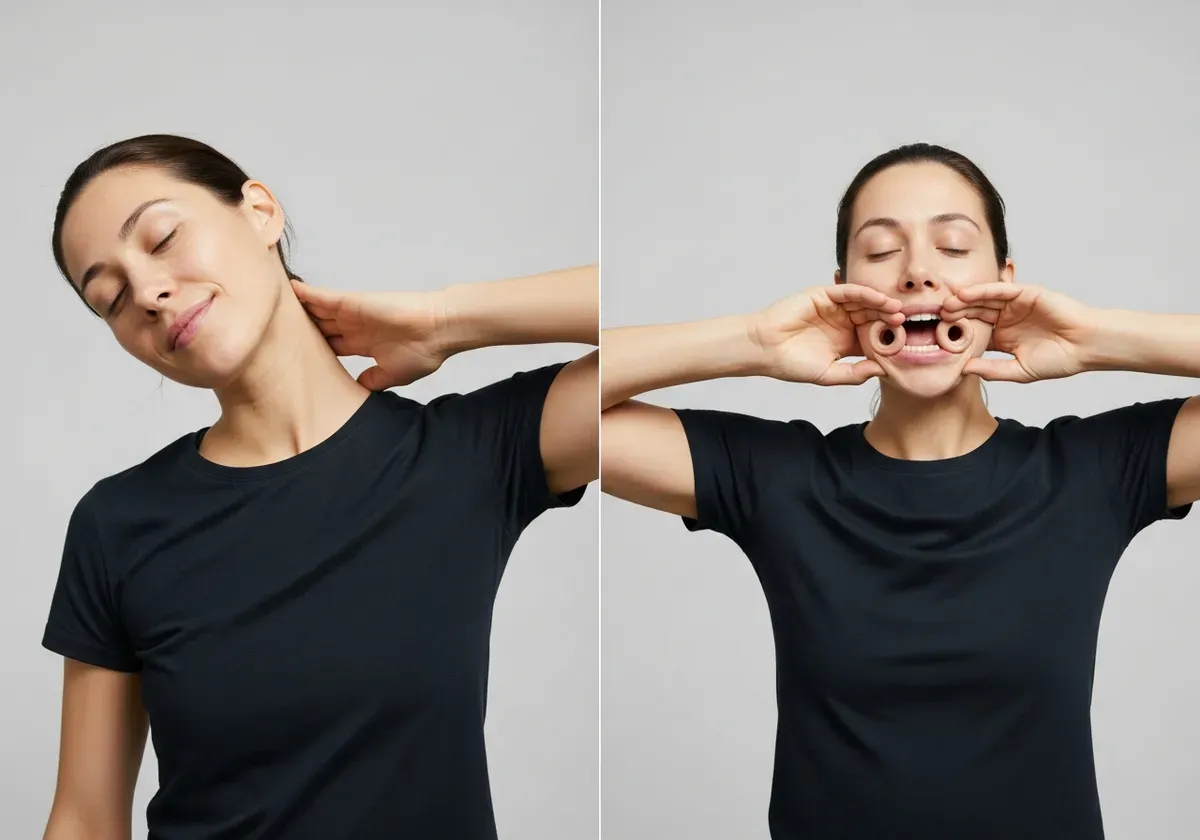
Key Factors Affecting Jawline Definition: Impact Comparison
| Factor | Impact on Jawline Visibility | Can Exercises Change It? | Effort Required |
|---|---|---|---|
| Body Fat Percentage | Highest - primary determinant | No (diet/cardio required) | High |
| Bone Structure (Genetics) | High - foundational | No | None |
| Muscle Development (Masseter/Platysma) | Moderate - subtle enhancement | Yes | Medium |
| Posture | Moderate - immediate visual effect | Yes | Low |
| Skin Elasticity (Age-Related) | Moderate - affects muscle visibility | No | None |
| Facial Bloating/Water Retention | Moderate - temporary obscuring | Indirectly (lifestyle) | Low-Medium |
Body Fat Percentage: The Biggest Factor in Jawline Visibility
Subcutaneous fat sits between your skin and facial muscles. When it's thick, it obscures everything underneath, bone structure, muscle definition, all of it. You can have the strongest masseter muscles in the world and still look undefined if you're carrying excess facial fat.
For men, jawline definition typically becomes visible around 15% body fat. For women, around 20-22%. These are rough guidelines, genetics play a role in where you store fat.
Spot reduction doesn't exist. You can't exercise your jaw to burn facial fat. Weight loss happens systemically through caloric deficit, and your body decides where fat comes off first. For many people, the face is one of the last places to lean out.
Healthy weight loss for adults over 55 means 0.5-1 pound weekly. Faster loss often sacrifices muscle mass, which you can't afford to lose at this age. Combine modest caloric reduction with strength training for your whole body, not just your face.
Research published in the International Journal of Obesity (2017) found that facial fat is typically among the last subcutaneous fat deposits to mobilize during weight loss, with men generally requiring body fat percentages below 15% and women below 20% before significant jawline definition becomes visible. A study from the University of Toronto (2014) tracking 3D facial scans during weight loss demonstrated that participants needed to lose an average of 8-9 pounds before facial changes became perceptible to observers, with jawline definition requiring even greater total fat loss—often 15-20 pounds depending on individual fat distribution patterns.
Protein intake matters more as you age. Aim for 0.8-1 gram per pound of body weight to preserve muscle during weight loss. This applies to facial muscles too, though they're not the primary concern.
Posture Correction for Immediate Jawline Improvement
Forward head posture, common if you spend hours at a computer, creates a collapsed appearance in your neck and jaw. Your head juts forward, your chin tucks down, and the neck-to-jaw angle disappears.
Stand sideways in front of a mirror. Your ear should align roughly with your shoulder. If your ear is 2-3 inches forward, you have forward head posture. This makes your jawline look worse instantly, regardless of muscle development or body fat.
The fix: chin tucks. Pull your chin straight back, not down, like you're making a double chin deliberately. Hold 5 seconds. Do 10 reps, three times daily. This strengthens the deep neck flexors and retrains your posture.
Shoulder blade squeezes help too. Pull your shoulder blades together and down. Hold 5 seconds. This opens your chest and naturally brings your head back over your shoulders.
Better posture creates an immediate visual improvement, sometimes more dramatic than weeks of jaw exercises. The angle from your neck to your jaw becomes more defined when your head is properly positioned.
Reducing Facial Bloating and Water Retention
Sodium intake affects facial puffiness significantly. The American Heart Association recommends no more than 2,300 mg daily, ideally closer to 1,500 mg for adults over 55. Most Americans consume 3,400 mg daily, much of it from processed foods.
High sodium causes water retention, which shows up noticeably in your face. Your jawline looks softer, your features less defined. Cut back on processed foods, restaurant meals, and added salt for a week, you'll see a difference.
Hydration seems counterintuitive, but drinking more water actually reduces bloating. When you're dehydrated, your body hoards water. Aim for 8-10 glasses daily. Your face will look leaner within days.
Sleep position matters. Sleeping face-down or on your side can cause fluid accumulation on one side of your face. Sleeping on your back with your head slightly elevated reduces morning puffiness.
Alcohol is a double hit, it dehydrates you and causes inflammation. A night of drinking can add visible puffiness that takes 2-3 days to resolve. If jawline definition matters to you, moderate your intake.
Measuring Progress and Setting Realistic Timelines
You need objective measurements because your perception is unreliable. You see your face every day, subtle changes disappear into the noise.
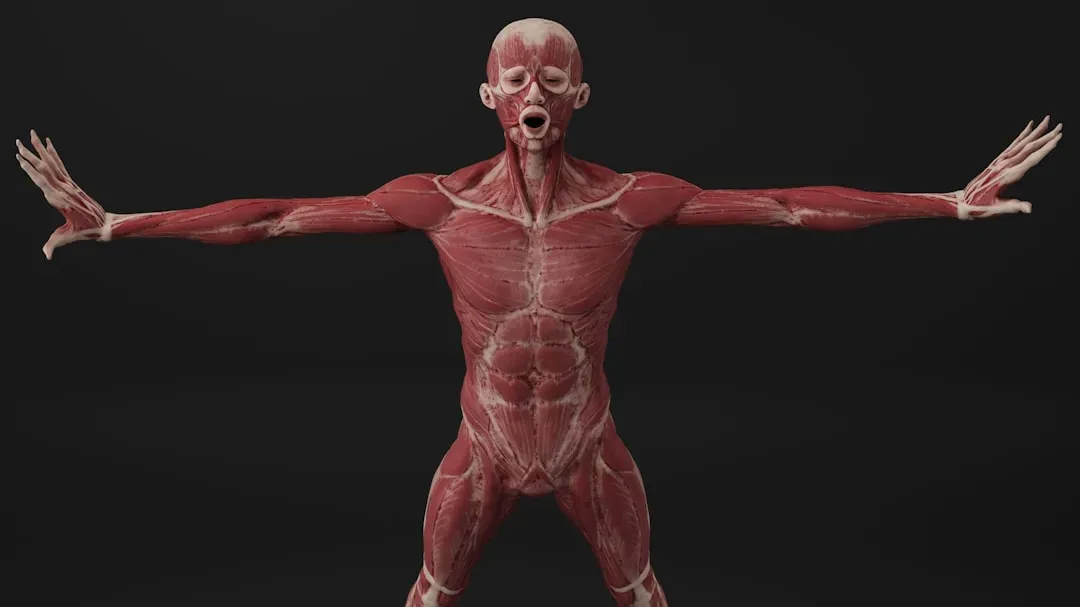
Take photos every two weeks. Same time of day, same lighting, same angle. Stand in front of a window with natural light, turn 45 degrees, and shoot from slightly above eye level. This angle shows the jaw-to-neck transition clearly.
Take a straight-on photo too, with neutral expression. Don't smile, don't tense your jaw. Just relax. These baseline photos are crucial for tracking changes you won't notice day-to-day.
Week 1-4: You'll feel the muscles working but won't see visible changes. This is normal. Muscle adaptation happens before hypertrophy becomes visible. Don't quit here, most people do.
Week 6-8: Subtle changes emerge. You might notice slightly more definition in certain lighting. Other people probably won't comment yet. This is when consistency really matters.
Week 10-12: If you've been consistent with exercises AND addressed body composition and posture, changes become noticeable. Not dramatic, we're talking modest improvement in muscle tone and definition.
Beyond 12 weeks: Gains plateau for most people. Your facial muscles are small and reach their genetic potential relatively quickly. Maintenance becomes the goal, 3-4 sessions weekly instead of daily.
"Facial muscles are unique in that they're relatively small and attach directly to skin rather than bone, which means they respond differently to exercise than larger skeletal muscles," says Dr. Jeffrey Spiegel, Chief of Facial Plastic and Reconstructive Surgery at Boston University School of Medicine. "While you can achieve some toning, the changes are modest and plateau relatively quickly compared to body muscles."
Track how your face feels too. Reduced tension, fewer headaches, and easier chewing are functional improvements that matter even if aesthetic changes are minimal.
Alternative and Complementary Approaches to Jawline Enhancement
Exercises aren't the only tool. Several complementary approaches can enhance results or provide alternatives if exercises aren't suitable for you.
Facial massage improves circulation and lymphatic drainage, reducing puffiness that obscures definition. Use your knuckles to massage along your jawline from chin to ear, moderate pressure, 2-3 minutes daily. This isn't a substitute for exercise but it helps.
Gua sha tools, flat stones used for facial massage, have gained popularity. The technique involves scraping the tool along your jaw and neck to promote drainage. Evidence is mostly anecdotal, but the massage component has merit. Just don't press too hard, bruising helps nobody.
Retinol and vitamin C serums improve skin elasticity over time. They won't change your bone structure or muscle tone, but tighter skin can make existing definition more visible. Results take 8-12 weeks minimum. These are long-term investments.
Professional options include Kybella injections (dissolves submental fat under the chin) and radiofrequency treatments (tightens skin). These are expensive and carry risks. They're not my first recommendation, but they exist if exercises and lifestyle changes don't achieve your goals.
The most effective approach combines multiple strategies: exercises for muscle tone, weight management for fat reduction, posture correction for immediate visual improvement, and skincare for elasticity. No single intervention works as well as the combination.
Be patient. Facial changes happen slowly, especially after 55. What you're really building is sustainable habits that maintain your appearance long-term, not quick fixes that disappear when you stop.
Related Articles
- Looksmaxxing Definition: What Does Looksmaxing Mean?
- Looksmaxxing: What to Do First (Beginner Checklist)
- The Ultimate Looksmaxxing Guide: Step-by-Step Improvement Plan
- Jawline Improvement: Bone Smashing, Exercises & Surgery Guide
- Looksmaxxing Face Rater: How to Rate Your Own Facial Features
- Looksmaxxing Chart for Men: Male Rating Scale Explained
Frequently Asked Questions
How long does it take to see results from jawline exercises?
Most people notice subtle changes around weeks 6-8 with daily practice, while significant improvement typically takes 12-16 weeks. However, results vary based on age, genetics, and body fat percentage. Older individuals may see less dramatic visual changes despite genuine muscle strength improvements.
Can jawline exercises alone give me a defined jawline?
No. Jawline exercises only address muscle development, which is just one of three factors affecting jawline appearance (the others being bone structure and subcutaneous fat). Body fat percentage is actually the biggest factor—you won't see definition if you're carrying excess facial fat, regardless of muscle strength.
What body fat percentage do I need for a visible jawline?
A man at 25% body fat typically won't have visible jawline definition even with strong muscles. Dropping to around 15% body fat makes bone structure and muscle tone become noticeably apparent. The exact percentage varies by individual genetics and age.
Are jawline exercises safe to do daily?
While daily practice is recommended for results, you should watch for signs of overuse like jaw pain, clicking, or soreness. Always include proper warm-up and cool-down protocols. If you have TMJ disorder or other jaw conditions, consult a healthcare provider before starting.
Do jawline exercises work better for younger people?
Yes. Younger people see more dramatic visual results because their skin has more collagen and elasticity. People over 55 may experience genuine muscle strength improvements but less visible surface definition due to natural skin aging, fat pad shifts, and bone resorption in the mandible.
Which muscles do jawline exercises target?
The main targets are the masseter muscle (which powers chewing and responds to resistance training) and the platysma muscle (which runs from your chest to jawline and creates a tighter neck and lower face appearance when developed).
What's more important for jawline definition—exercise or posture?
Posture correction provides immediate jawline improvement and is a bigger factor than exercise alone. Poor posture can make your jawline appear weaker, while correcting it instantly enhances definition. Combined with exercise and proper body fat levels, posture is a critical component.
Can jawline exercises change my bone structure?
No. Exercises cannot reshape your bone structure, which is determined by genetics. They can only strengthen and slightly enlarge the muscles around your jaw. If you want structural changes, you would need surgical options.