Best Looksmaxxing Products for Men: Essential Recommendations
Looksmaxxing products for men center on four evidence-based categories: daily SPF 30+ sunscreen, retinol treatments for skin texture, minoxidil for hair maintenance, and professional-grade oral care. These aren't miracle workers, but clinical research shows they deliver measurable improvements when used consistently. The best approach combines quality skincare basics, targeted hair solutions, and strategic grooming products that address specific concerns without breaking the bank.
Table of Contents
- Understanding Looksmaxxing: A Practical Definition for Modern Men
- The Science Behind Appearance Optimization
- Setting Realistic Expectations for Results
- Essential Skincare Products: The Foundation of Looksmaxxing
- Cleansers: Choosing the Right Formula for Your Skin Type
- Moisturizers with Anti-Aging Benefits
- Sun Protection: The Most Important Anti-Aging Product
- Retinol and Retinoids: Proven Age-Fighting Ingredients
- Hair and Facial Hair Products That Make a Difference
- Hair Loss Prevention Products: What Actually Works
- Styling Products for Volume and Texture
- Beard Care Essentials for Groomed Facial Hair
- Oral Care and Smile Enhancement Products
- Safe Teeth Whitening Options for Mature Adults
- Electric Toothbrushes and Advanced Oral Care
- Body Grooming and Fragrance Products
- Premium Body Care Products Worth the Investment
- Selecting and Wearing Cologne Properly
- Essential Grooming Tools and Maintenance
- Building Your Looksmaxxing Routine: Implementation and Budget Planning
Understanding Looksmaxxing: A Practical Definition for Modern Men
Looksmaxxing simply means optimizing your appearance through deliberate product choices and grooming habits. The term comes from internet forums, but strip away the jargon and you're left with something straightforward: using proven products to look well-maintained and confident.
This isn't about chasing perfection or following extreme tactics. It's about strategic improvements that make a visible difference. Think of it as the male equivalent of a solid skincare routine, except focused on what actually works rather than what sounds impressive on a label.
The approach works best when you separate evidence-based strategies from marketing hype. Some products have decades of research behind them. Others are expensive placebos wrapped in clever packaging.
The Science Behind Appearance Optimization
Dermatological research consistently points to specific ingredients that deliver real results. Retinoids increase collagen production and speed up cell turnover, which reduces fine lines and improves skin texture (according to clinical studies published by the National Institutes of Health). That's not marketing speak, it's measurable change at the cellular level.
Sunscreen prevents cumulative UV damage that ages skin faster than anything else. The American Academy of Dermatology recommends broad-spectrum SPF 30 or higher applied daily to all exposed skin. Every dermatologist will tell you the same thing, honestly, because the research is that conclusive.
For hair loss, finasteride blocks the conversion of testosterone to DHT, the hormone that miniaturizes hair follicles in male pattern baldness (NIH research confirms this mechanism). Minoxidil increases blood flow to follicles. Both have FDA approval because controlled trials demonstrated they work for a significant percentage of men.
What products can't do is restructure bone, dramatically alter facial proportions, or reverse decades of sun damage overnight. They improve what you're working with, they don't fundamentally change it. That distinction matters when setting expectations.
Setting Realistic Expectations for Results
Skincare improvements appear gradually. Retinol typically shows visible changes after 12 weeks of consistent use. Your skin might look worse initially as it adjusts and purges, which catches people off guard. That's normal adaptation, not product failure.
Hair loss treatments require even more patience. Minoxidil takes four months before you'll notice reduced shedding, and six to twelve months for regrowth. Finasteride works similarly slowly. You're maintaining what you have and possibly recovering some ground, not growing a full head of hair if you're already significantly bald.
Teeth whitening delivers the fastest visible results, professional treatments show changes within hours, while at-home strips work over two weeks. But they can't fix structural issues or severely stained teeth from medications. Some discoloration requires dental work beyond cosmetic products.
Age matters here. Mature skin produces less natural oil and collagen, which means moisturizing becomes essential rather than optional (according to the American Academy of Dermatology). Products work, but they're fighting against natural aging processes. You'll look better than if you used nothing. You won't look twenty-five again.
Essential Skincare Products: The Foundation of Looksmaxxing
A functional skincare routine needs four components: cleanser, moisturizer, sunscreen, and retinol. Everything else is optional refinement. These four have actual scientific backing rather than hopeful ingredient lists.
Essential Skincare Products: Ingredients, Timeline, and Expected Results
| Product Type | Key Ingredient | Application Frequency | Timeline to Visible Results | Primary Benefit |
|---|---|---|---|---|
| Sunscreen | Broad-spectrum SPF 30+ | Daily (all exposed skin) | Cumulative over months/years | Prevents UV damage and premature aging |
| Retinol/Retinoids | Retinoid compounds | 3-5 times per week (start low) | 12 weeks with consistent use | Increases collagen, reduces fine lines, improves texture |
| Moisturizer | Ceramides and humectants | Twice daily | Immediate hydration, 4+ weeks for visible improvement | Maintains skin barrier, essential for mature skin |
| Cleanser | Salicylic acid (oily) or gentle formula (dry) | Twice daily | Immediate cleansing effect | Removes dirt and oil without disrupting skin barrier |
Start here before adding serums, toners, or specialized treatments. Get the basics working consistently for three months. Then evaluate whether you need anything more complex.
Cleansers: Choosing the Right Formula for Your Skin Type
Oily skin responds well to gel cleansers with salicylic acid. CeraVe Foaming Facial Cleanser runs about twelve dollars and contains ceramides that protect your skin barrier while cleaning. It's basic, effective, and doesn't strip your face.
Dry or sensitive skin needs cream-based cleansers without harsh surfactants. CeraVe Hydrating Facial Cleanser (same price range) or La Roche-Posay Toleriane Hydrating Gentle Cleanser (around fifteen dollars) work without leaving that tight, uncomfortable feeling.
Wash your face once at night to remove daily grime and sunscreen. Morning cleansing is optional unless your skin gets genuinely oily overnight. Most men over-cleanse, which creates more problems than it solves. I spent years using whatever body wash happened to be in my shower on my face, and wondered why my skin always felt like sandpaper by midday. The day I switched to CeraVe Hydrating Cleanser, I actually noticed the difference while patting my face dry—no tightness, no redness around my nose, just clean skin that didn't feel like it had been attacked.
Moisturizers with Anti-Aging Benefits
Look for three ingredients: hyaluronic acid for hydration, ceramides for barrier protection, and peptides for collagen support. You don't need all three in one product, but having at least two makes a difference.
Budget option: CeraVe PM Facial Moisturizing Lotion contains niacinamide and ceramides for under fifteen dollars. It's lightweight enough for daily use and actually absorbs instead of sitting on your skin.
Mid-range: Neutrogena Hydro Boost Water Gel with hyaluronic acid runs around twenty dollars and works well under sunscreen. The gel texture suits men who hate feeling like they're wearing product.
Premium: SkinCeuticals A.G.E. Interrupter costs significantly more (around one hundred fifty dollars) but combines multiple anti-aging ingredients in clinically tested concentrations. Worth it if you're serious about results and have the budget.
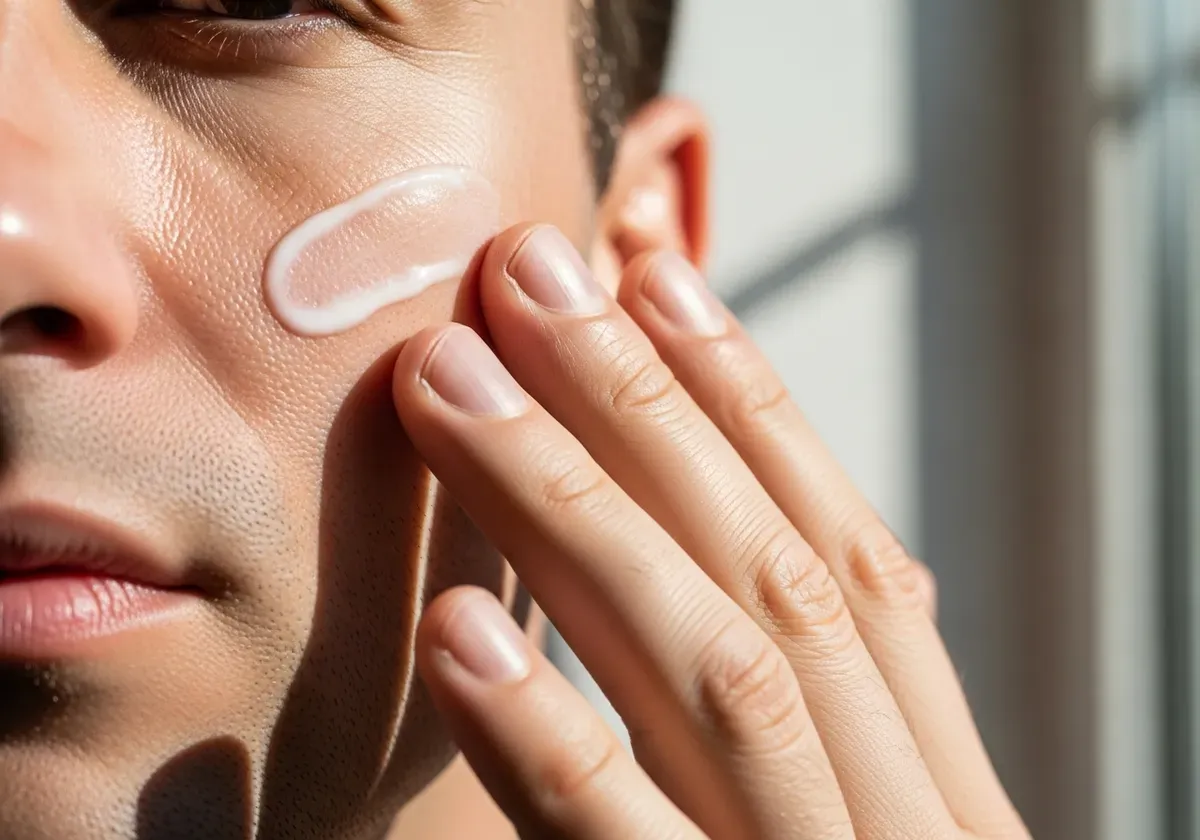
Apply moisturizer to damp skin right after cleansing. It traps water in your skin rather than just sitting on top. Day formulations should be lighter; night creams can be richer since you're not going anywhere.
Sun Protection: The Most Important Anti-Aging Product
Daily SPF 30+ is non-negotiable if you care about preventing further aging. UV exposure causes more visible aging than any other factor you can control (American Academy of Dermatology guidance confirms this repeatedly).
Mineral sunscreens use zinc oxide or titanium dioxide. They sit on skin and reflect UV rays, which works well for sensitive skin but can leave a white cast. Chemical sunscreens absorb UV radiation through a chemical reaction and typically feel lighter.
EltaMD UV Clear Broad-Spectrum SPF 46 is dermatologist-recommended and doesn't feel greasy. Costs around thirty-seven dollars but lasts months. La Roche-Posay Anthelios Melt-in Milk Sunscreen SPF 60 runs cheaper at around twenty dollars and genuinely disappears into skin.
For budget-conscious buyers, Neutrogena Ultra Sheer Dry-Touch SPF 55 costs under ten dollars and performs adequately. The texture isn't quite as elegant, but it protects, which is what matters.
Retinol and Retinoids: Proven Age-Fighting Ingredients
Retinoids are vitamin A derivatives that increase cell turnover and stimulate collagen production. They're the only topical ingredient with extensive clinical evidence for reducing wrinkles and improving skin texture (NIH research demonstrates this across multiple studies).
Start with over-the-counter retinol at low concentration, 0.25% or 0.5%, to let your skin adapt. The Ordinary Retinol 0.5% in Squalane costs under ten dollars and works as an introduction. Use it twice weekly for the first month, then increase frequency gradually.
Mid-range option: RoC Retinol Correxion Deep Wrinkle Night Cream at around twenty-five dollars combines retinol with moisturizing ingredients, which reduces irritation. Good for men who want one product instead of layering.
Prescription tretinoin (Retin-A) is stronger and faster-acting but requires a doctor's visit. It costs more and causes more initial irritation, but delivers better results if you can tolerate it. Well worth discussing with a dermatologist if over-the-counter retinol doesn't satisfy you after six months.
Always apply retinol at night, UV exposure degrades it and increases skin sensitivity. Start with pea-sized amounts. Your face will likely peel and redden initially, that's expected adjustment, not an allergic reaction, though if it's severe, scale back frequency.
Hair and Facial Hair Products That Make a Difference
Hair loss and grooming products range from scientifically validated treatments to expensive snake oil. The difference matters significantly when you're spending money hoping for results.
Hair Loss and Oral Care Treatments: Mechanism, Timeline, and Realistic Expectations
| Treatment | How It Works | FDA Approved | Timeline to Results | Realistic Outcome |
|---|---|---|---|---|
| Minoxidil | Increases blood flow to hair follicles | Yes | 4-6 months for reduced shedding; 6-12 months for regrowth | Maintains existing hair and may recover some lost ground |
| Finasteride | Blocks DHT hormone that miniaturizes follicles | Yes | 6-12 months | Slows hair loss; modest regrowth in some men |
| Professional Teeth Whitening | Bleaching agents remove surface and internal stains | Yes | Hours to days | Significant visible whitening; cannot fix structural issues |
| At-Home Whitening Strips | Lower concentration bleaching agents | Yes | 2 weeks | Moderate whitening; slower than professional treatment |
Focus on the few products with actual FDA approval and clinical backing. Everything else is supplementary at best, fraudulent at worst.
Hair Loss Prevention Products: What Actually Works
Two treatments have solid evidence: minoxidil (Rogaine) and finasteride (Propecia). Minoxidil is topical, available over-the-counter, and works by increasing blood flow to hair follicles. Apply it twice daily to your scalp. Expect to see reduced shedding after four months and possible regrowth after six to twelve months (according to NIH clinical research).
Generic minoxidil 5% solution costs around twenty-five dollars for a three-month supply. The brand name offers nothing extra except higher prices. Foam versions feel less greasy if you're willing to pay slightly more.
Finasteride requires a prescription and works by blocking DHT production. It's more effective than minoxidil for many men, but comes with potential side effects including reduced libido in a small percentage of users. The research shows it works (NIH studies confirm effectiveness in multiple controlled trials), but you need to weigh benefits against risks with your doctor.
DHT-blocking shampoos like Nizoral contain ketoconazole, which has some anti-androgen properties. They're not as effective as finasteride or minoxidil, but they're low-risk additions to your routine. Use them twice weekly, not daily, ketoconazole can dry your scalp with overuse.
Hair vitamins and biotin supplements? Save your money. Unless you have a diagnosed deficiency, they won't do anything. That's not pessimism, it's what the research consistently shows when tested against placebo.
Styling Products for Volume and Texture
Thinning hair benefits from products that add texture without weight. Heavy pomades and gels make sparse hair look worse by clumping it together and exposing scalp.
Clay-based products like Hanz de Fuko Claymation or Baxter of California Clay Pomade provide hold and texture while creating the appearance of thickness. They run fifteen to twenty dollars and last months with daily use. Apply to damp hair and work through with your fingers for a natural look.
Hair fibers like Toppik conceal thinning areas by clinging to existing hair through static. They're basically colored keratin powder that creates the illusion of density. Not a permanent solution, but effective for immediate appearance improvement.
Beard Care Essentials for Groomed Facial Hair
A well-maintained beard requires oil or balm to prevent the wiry, unkempt look that adds years to your appearance. Beard oil moisturizes both hair and the skin underneath, reducing itching and flaking.
Honest Amish Beard Oil runs around fifteen dollars and uses simple, effective ingredients, jojoba oil, argan oil, and essential oils for scent. Apply a few drops daily after showering while your beard is still damp. I started using Honest Amish beard oil about six months into growing my beard, right when it hit that scratchy, straw-like phase that made me want to shave it all off. Within three days of applying just four drops after my morning shower, my girlfriend commented that my beard actually felt soft when she touched my face instead of like steel wool—and the constant flaking on my shirts finally stopped.
Beard balm adds light hold for shaping while moisturizing. Utility Balm or Viking Revolution Beard Balm cost around twelve to fifteen dollars. Warm a small amount between your palms and work through your beard, then comb or brush into shape.
For trimming, invest in quality tools once rather than replacing cheap ones repeatedly. Wahl Stainless Steel Lithium Ion+ Beard Trimmer costs around sixty dollars and lasts years with basic maintenance.
Oral Care and Smile Enhancement Products
Your smile affects first impressions more than most grooming factors. Yellow or stained teeth undermine otherwise solid appearance efforts. Good news: oral care improvements show results faster than skincare.
Safe Teeth Whitening Options for Mature Adults
Professional whitening through your dentist delivers the fastest, most dramatic results. In-office treatments cost three hundred to eight hundred dollars but work in a single session. The American Dental Association recommends professional supervision for whitening to avoid enamel damage and ensure safe application.
At-home whitening trays custom-made by your dentist run one hundred fifty to four hundred dollars. You wear them with professional-strength gel for a few hours daily over two weeks. Results approach in-office quality with more gradual, controlled application.
Over-the-counter strips work adequately for mild staining. Crest 3D White Professional Effects Whitestrips cost around forty-five dollars for a 20-day supply and use 10% hydrogen peroxide. The ADA notes that products with 10% carbamide peroxide are safe and effective when used as directed.
Whitening toothpastes remove surface stains through mild abrasives but won't change your tooth's natural color. Sensodyne Pronamel Gentle Whitening costs around seven dollars and cleans without damaging enamel.
Realistic expectations: whitening removes stains from coffee, tea, and aging. It won't fix grayish teeth from medications or create blindingly white teeth if yours are naturally cream-colored. Most men see two to three shades of improvement, which is noticeable without looking artificial.
Electric Toothbrushes and Advanced Oral Care
Electric toothbrushes remove more plaque than manual brushing when used correctly. The oscillating or sonic motion does work your hand can't replicate, reaching areas you typically miss.
Oral-B Pro 1000 costs around fifty dollars and includes a pressure sensor that prevents you from brushing too hard (which damages gums). It's basic but effective, you don't need Bluetooth connectivity or app integration to clean your teeth properly.
Philips Sonicare ProtectiveClean 5100 runs around eighty dollars and uses sonic vibration instead of rotation. Some people prefer the sensation. Both brands have decades of research supporting their effectiveness.
Water flossers like Waterpik complement brushing by removing debris between teeth and below the gumline. The Waterpik Aquarius costs around sixty dollars and reduces gum inflammation noticeably within weeks of consistent use. It's not a replacement for string floss, to be fair, but it's better than not flossing at all, which is what most men actually do.
Body Grooming and Fragrance Products
Body care separates men who smell clean from men who smell good. The difference is subtle but noticeable in professional and social situations.
Premium Body Care Products Worth the Investment
Body wash with actual skin benefits beats bar soap for mature skin. Dr. Squatch or Duke Cannon body washes cost around nine to twelve dollars and contain moisturizing ingredients that prevent the tight, dry feeling cheaper soaps create.
Aluminum-free deodorants have improved significantly in recent years. Native Deodorant and Schmidt's Natural Deodorant actually work now, costing around twelve dollars. They use baking soda or magnesium to neutralize odor rather than blocking sweat with aluminum compounds.
Body lotion prevents the dry, flaky skin that makes you look poorly maintained. CeraVe Moisturizing Cream comes in a tub for around seventeen dollars and lasts months. Apply it after showering while skin is still damp, focusing on arms, legs, and any dry patches.
Selecting and Wearing Cologne Properly
Fragrance should be discovered, not announced. If people smell you from across the room, you're wearing too much. One or two sprays maximum, on your chest or neck, not your clothes.
Quality cologne costs more but smells better and lasts longer than drugstore versions. Dior Sauvage, Bleu de Chanel, and Acqua di Gio are popular for good reason, they're crowd-pleasers that work for most occasions. Expect to pay eighty to one hundred twenty dollars for 3.4 ounces, which lasts six months to a year with daily use.
For budget-conscious buyers, Nautica Voyage costs around twenty-five dollars and smells fresh without being overwhelming. It's not complex or sophisticated, but it's pleasant and appropriate for daily wear.
Sample fragrances before buying full bottles. Department stores provide samples, or buy discovery sets from brands like Scentbird for around fifteen dollars monthly. Fragrance smells different on your skin than on paper strips, and what works for someone else might not work for you.
Essential Grooming Tools and Maintenance
Nail care matters more than most men realize. Ragged cuticles and untrimmed nails look sloppy regardless of how well-groomed the rest of you is. A basic manicure set costs around fifteen dollars, trim nails straight across weekly and push back cuticles after showering.
Body hair trimming requires different tools than facial hair. Philips Norelco Bodygroom Series 7000 costs around sixty dollars and handles everything below the neck without nicking skin.
Nose and ear hair trimmers are non-negotiable after a certain age. Panasonic ER-GN30-K costs around thirteen dollars and works efficiently without pulling. Use it weekly as preventive maintenance rather than waiting until hair becomes visible.
Building Your Looksmaxxing Routine: Implementation and Budget Planning
Starting everything at once overwhelms your schedule and your wallet. Build gradually, focusing on high-impact changes first. Skincare and sun protection deliver the most visible long-term benefits.
Month one: establish basic skincare with cleanser, moisturizer, and SPF. Total cost runs forty to seventy dollars depending on product choices. Use these consistently for four weeks before adding anything else.
Month two: add retinol twice weekly and upgrade your toothbrush to electric. Another sixty to eighty dollars investment. Your skin might purge initially, that's normal, not a reason to quit.
Month three: address hair concerns if relevant, either with minoxidil or quality styling products. Budget fifty to seventy-five dollars. Evaluate whether you need medical hair loss treatment or just better grooming products.
By month four, you have a complete routine that costs roughly one hundred fifty to two hundred twenty-five dollars to establish, then forty to sixty dollars monthly to maintain with product replacements. That's less than many men spend on things that provide zero appearance benefit.
According to a 2022 survey by the American Academy of Dermatology, men who establish consistent skincare routines report spending an average of $40-75 monthly on grooming products, with millennials and Gen Z males showing a 70% increase in skincare product purchases compared to five years prior. The global men's grooming market reached $81.2 billion in 2022, according to Grand View Research, demonstrating that investing in appearance has become mainstream rather than exceptional. Notably, dermatologists report that men who maintain structured routines for 90 days or longer show significantly better adherence rates—around 78%—compared to those who attempt to implement all changes simultaneously, which typically results in abandonment within 3-4 weeks.
Track what works by taking monthly photos in consistent lighting. Your memory lies about gradual changes, but photos don't. Compare month three to month zero, not yesterday to today.
Premium products make sense for items you use daily and that contact your skin for extended periods, moisturizer, sunscreen, retinol. Budget options work fine for cleansers and body wash that rinse off immediately. Prioritize spending where it creates measurable difference.
Don't skip steps to save time. A routine that takes eight minutes morning and night beats an elaborate 30-minute process you'll abandon after two weeks. Consistency matters more than perfection.
Adjust based on results and how your skin responds. If a product causes persistent irritation beyond the normal adjustment period, replace it. If something works well, stick with it rather than constantly chasing new releases.
"The biggest mistake people make is trying to do everything at once. Start with the basics—cleanser, moisturizer, sunscreen—and add products slowly, one at a time, waiting at least two weeks between additions so you can identify what's actually working," says Dr. Joshua Zeichner, Director of Cosmetic and Clinical Research in Dermatology at Mount Sinai Hospital in New York City.
The goal is looking well-maintained and confident, not achieving some impossible standard. Products improve what you're working with, they don't transform you into someone else. That's actually good news, because working with your natural features instead of fighting them creates better, more sustainable results.
Most men see noticeable improvements within three months of consistent product use. Not dramatic transformation, but visible refinement that people notice without being able to pinpoint exactly what changed. That's the sweet spot, looking better without looking like you're trying too hard.
Related Articles
- Looksmaxxing Definition: What Does Looksmaxing Mean?
- Looksmaxxing: What to Do First (Beginner Checklist)
- The Ultimate Looksmaxxing Guide: Step-by-Step Improvement Plan
- Jawline Improvement: Bone Smashing, Exercises & Surgery Guide
- Looksmaxxing Chart for Men: Male Rating Scale Explained
- Best Free Looksmaxxing Guides (Reddit & Course Alternatives)
Frequently Asked Questions
How long before I see results from looksmaxxing products?
Results vary by product type: retinol shows visible improvements after 12 weeks of consistent use, hair loss treatments require 4-12 months, and teeth whitening can show changes within hours to two weeks. Patience and consistency are critical, as most products work gradually at the cellular level rather than delivering overnight transformations.
What's the most important looksmaxxing product to start with?
Daily SPF 30+ sunscreen is the foundation—it prevents cumulative UV damage that ages skin faster than any other factor and is recommended by the American Academy of Dermatology. If you're only adding one product to your routine, sunscreen delivers the most measurable long-term benefits.
Can looksmaxxing products fix severe hair loss or baldness?
Minoxidil and finasteride work best for preventing further loss and recovering some ground, but they won't grow a full head of hair if you're already significantly bald. These products maintain what you have and may restore some density, but they have realistic limitations based on how advanced your hair loss is.
Is retinol safe for all skin types, and why does skin sometimes look worse initially?
Retinol is generally safe but can cause initial irritation and purging as your skin adjusts—this is normal adaptation, not product failure. Start with lower concentrations and gradually increase frequency. If you have sensitive skin, consult a dermatologist before starting retinol treatment.
What's the difference between minoxidil and finasteride for hair loss?
Minoxidil increases blood flow to hair follicles and works topically, while finasteride blocks DHT hormone conversion that causes hair miniaturization and works systemically. Both are FDA-approved and often work best when used together, but they operate through different mechanisms.
Do expensive looksmaxxing products work better than affordable alternatives?
Price doesn't guarantee effectiveness—the key is choosing products with evidence-based ingredients like retinol, SPF, and minoxidil regardless of cost. Many affordable products contain the same active ingredients as premium brands; focus on ingredient quality and consistency rather than brand prestige.
Can looksmaxxing products change facial structure or bone shape?
No—looksmaxxing products improve skin texture, reduce fine lines, enhance hair, and optimize grooming, but they cannot restructure bone or dramatically alter facial proportions. They enhance what you're working with rather than fundamentally changing your facial structure.
Why is moisturizing more important as men get older?
Mature skin produces less natural oil and collagen, making moisturizing essential rather than optional according to the American Academy of Dermatology. As you age, your skin's ability to retain moisture decreases, so external moisturizers become critical for maintaining skin health and appearance.